August 9, 2026
Co-Managed Cybersecurity for IT Providers
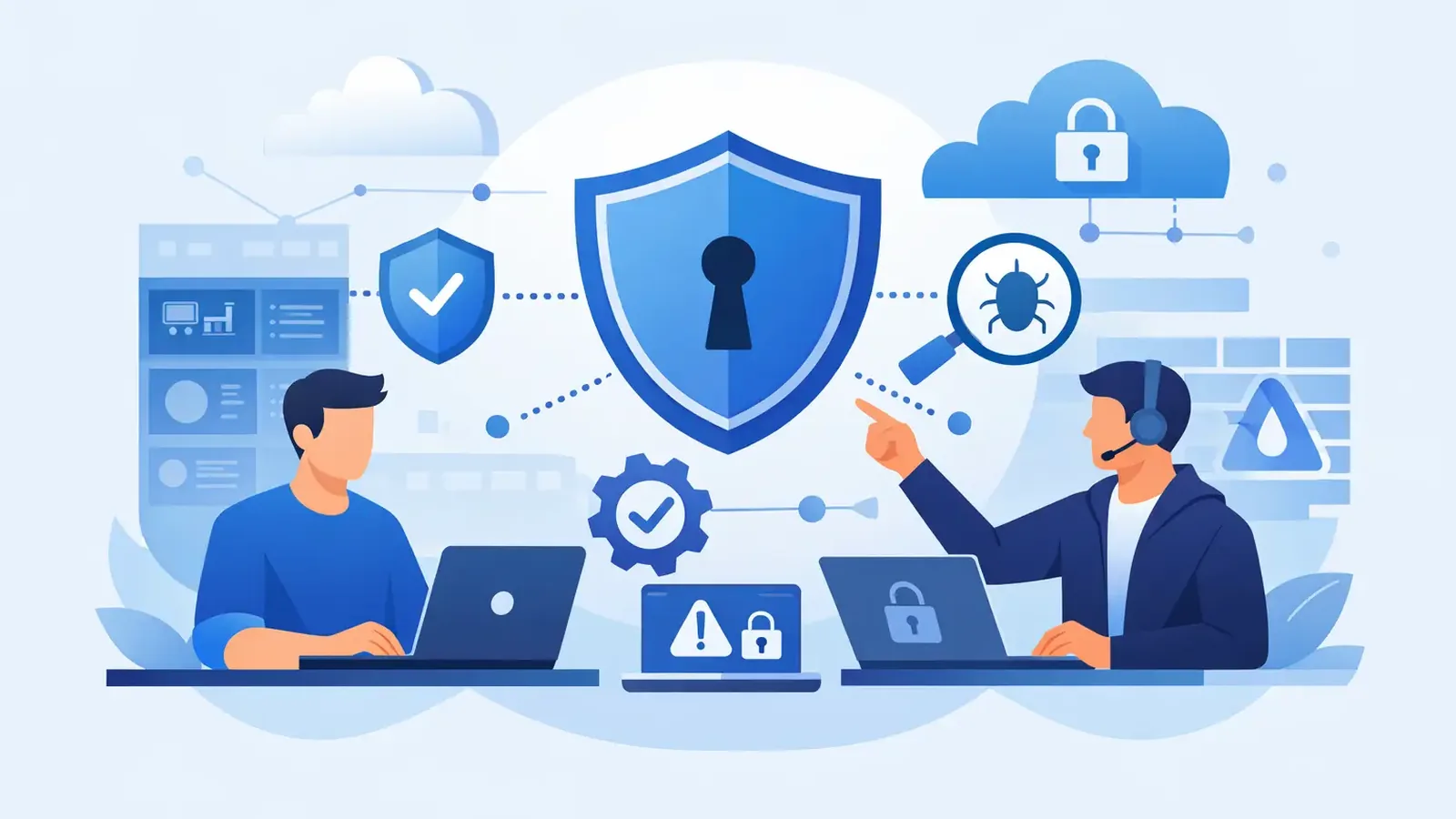
A suspicious PowerShell command runs on an employee laptop at 2:13 a.m. Your IT provider may manage the network, Microsoft 365, backups, and help desk. But who sees that activity, determines whether it is malicious, contains it if necessary, and stays with the incident until it is resolved? That is the gap co-managed cybersecurity for IT providers is designed to fill.
Many small businesses already have technology support they trust. They do not need to replace that relationship just to get serious endpoint security. They need a dedicated security layer that watches for real threats around the clock, takes action when evidence supports it, and works with their existing IT team when changes or recovery are required.
Why Antivirus Leaves an Operational Gap
Traditional antivirus is still useful, but it is not a security operations center. It is software that can block known threats and flag suspicious behavior. When a meaningful alert appears, someone still has to interpret it.
That work is harder than it sounds. Endpoint alerts can result from a legitimate administrator tool, a poorly configured application, an employee action, or an attacker moving through the environment. Ignoring alerts creates risk. Treating every alert as an emergency creates noise, disruption, and wasted time.
For an internal IT generalist or a local IT provider, security monitoring often competes with everything else on the schedule: password resets, printer issues, new employee setups, software problems, server maintenance, and client projects. A threat does not wait for the next business day or a free hour on the calendar.
The issue is not whether an IT provider is capable. It is whether that provider has agreed to provide 24/7 security monitoring, threat investigation, incident containment, remediation support, and documented follow-through. Those are distinct responsibilities. Many excellent IT providers do not operate a dedicated security team, and many businesses do not need or want to hire one.
What Co-Managed Cybersecurity Actually Means
Co-managed cybersecurity means the business keeps its existing IT provider while adding specialized managed security services. The two functions have different jobs but should work from the same facts.
The managed security team monitors protected endpoints, investigates suspicious activity, validates credible threats, and responds according to an agreed process. The IT provider continues handling the broader technology environment, such as user support, applications, networking, cloud administration, and infrastructure decisions.
In a well-run arrangement, there is no guessing about ownership. If an endpoint must be isolated to stop active attacker behavior, the security team acts quickly. If a device needs to be rebuilt, a line-of-business application needs attention, or a user requires a replacement computer, the IT provider can take over with clear incident context. The business owner receives understandable updates rather than a stream of unexplained technical alerts.
This model is not a way to pass responsibility back and forth. It works when both sides know who is watching, who can make containment decisions, who communicates with users, and who closes the loop after the immediate threat is handled.
Detection Matters Only When Someone Responds
Endpoint Detection and Response, often called EDR, provides visibility that basic antivirus does not. It can identify suspicious patterns such as unusual credential access, malicious persistence, risky scripts, or tools commonly used by attackers after they gain entry.
However, EDR software alone is not the full answer. A detection is a signal. The operational value comes from investigation and response.
A managed EDR service should have professionals reviewing meaningful activity, distinguishing likely threats from harmless events, and escalating when action is needed. For confirmed threats, the process should include containment, remediation, incident follow-through, and communication with the customer or IT provider. Otherwise, the business is still responsible for deciding what an alert means at the worst possible moment.
PC Vax delivers this model with Huntress-powered managed EDR, pairing endpoint detection with 24/7 monitoring and professional response. The focus is practical: identify what is real, reduce the chance of spread, help resolve the issue, and document what happened.
Where the IT Provider Fits
A co-managed approach should make the IT provider more effective, not make them defensive. The provider often has valuable knowledge that a security team needs: which devices are critical, which users have elevated access, what software is expected, and what business processes cannot be interrupted without planning.
At the same time, the security team brings a narrow but essential focus. It is watching endpoint activity across the environment and responding to signs that may never surface in a normal help desk workflow.
Consider a realistic situation. A user enters credentials into a fraudulent Microsoft 365 sign-in page. An attacker uses those credentials, accesses the device, and attempts to run tools that establish persistence. The security team sees suspicious endpoint behavior and isolates the computer before further activity can occur. The IT provider resets credentials, reviews access, assists the employee with a replacement or cleaned device, and confirms that normal operations can resume.
Neither party handled every task alone. The security team addressed the active threat. The IT provider handled the broader business technology response. The client got a coordinated outcome instead of a confusing question about which vendor to call.
Patching Is Part of Reducing Exposure
Threat monitoring is critical, but prevention still matters. Attackers regularly take advantage of known weaknesses in operating systems and common business applications. If a patch is available but a device remains unpatched for weeks or months, that device is easier to target.
Managed patch management can reduce this exposure by applying and tracking updates across enrolled devices. It is not a promise that every update will be risk-free. Some organizations use specialized software, older equipment, or operational systems that require testing before changes. In those cases, patching should follow an approved schedule and documented exceptions.
The key is accountability. A business should know which devices are covered, which updates were installed, which failed, and why any exceptions exist. This information is also useful when preparing for cyber-insurance applications or renewals.
Questions to Set Expectations Before You Buy
Before adding co-managed cybersecurity, ask direct questions. The answers should be clear enough for a business owner to understand, not buried in technical language.
- Who monitors endpoint alerts outside business hours?
- Who investigates suspicious activity before contacting our team?
- Can the service isolate a device when an active threat is confirmed?
- What information will our IT provider receive during an incident?
- Who handles remediation, follow-up, and final reporting?
- Does the service include patch management, or is it available as an add-on?
Also ask how communication works. A security provider may be able to contain a threat quickly, but the business and IT provider need to know what occurred, what action was taken, and what remains to be done. Good reporting turns security activity into a usable business record rather than a vague assurance that someone was watching.
The Trade-Offs Are Real, and Usually Worth Addressing
Co-managed security is not the right answer for every organization in the same form. A larger company with an established internal security operations center may need a different level of integration, custom reporting, or control. A very small office with only a few devices may prioritize a simple, predictable service over extensive policy management.
There can also be coordination work at the beginning. Device deployment, IT-provider contacts, escalation permissions, and patching expectations need to be established. That setup is worthwhile because uncertainty during an incident is expensive.
The alternative is often less intentional: buy security software, assume it is handled, and discover after an alert that no one owns the response. A co-managed model gives businesses a clearer answer without forcing them to abandon the IT support arrangement that already keeps their operations moving.
A business does not need enterprise complexity to take endpoint threats seriously. It needs the right people watching the right signals, authority to act when danger is confirmed, and an IT partner prepared to help carry the work through. When those responsibilities are clear before an incident begins, a difficult security event becomes a managed problem instead of a business-wide scramble.
PC Vax provides cybersecurity services, not insurance advice. Cyber insurance requirements vary by carrier, policy, and applicant, and PC Vax does not guarantee insurance eligibility, approval, coverage, or premiums.
Professional Cybersecurity. Made Simple.